Head of a Deer Illustration Collection: A Practical Evaluation
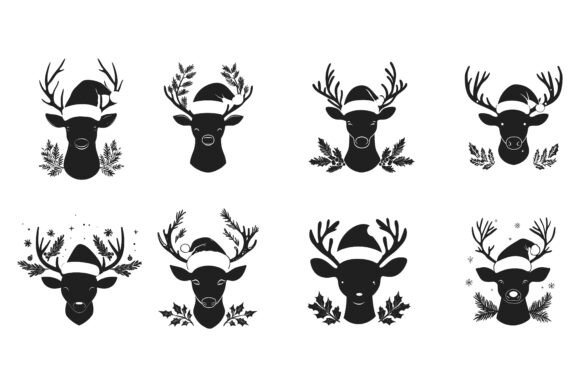
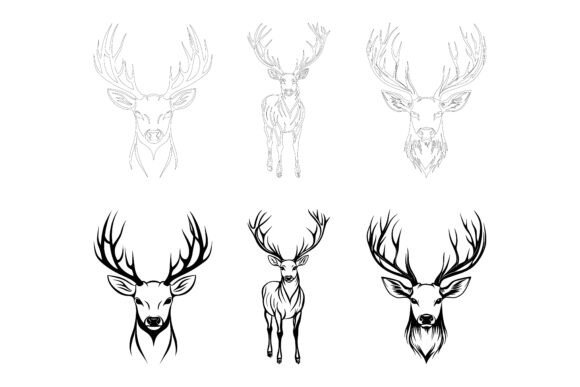
The Head of a Deer illustration set represents a carefully crafted vector artwork package built around a detailed deer portrait. Delivered in industry-standard AI and EPS formats alongside a ready-to-use JPG preview, this collection targets designers, content creators, and business owners who need a refined wildlife-themed graphic that can adapt across multiple platforms. Rather than offering a sprawling library of unrelated icons, the set focuses on a single, well-executed subject—making it worth evaluating on quality, flexibility, and practical fit for real-world projects.
What the Head of a Deer Illustration Set Actually Includes
At its core, this product provides a high-resolution deer head illustration built with vector precision. The inclusion of AI (Adobe Illustrator) and EPS (Encapsulated PostScript) files means the artwork remains fully scalable without any loss of quality—a critical factor for anyone working across both digital and print mediums. A supplementary JPG file offers a quick, no-setup option for immediate use in presentations, mockups, or web layouts where vector editing is not required.
The file structure deserves attention. Organised layers and clearly named elements within the source files reduce the time spent hunting for specific parts of the illustration. This kind of internal organisation often separates a professional-grade asset from a hobbyist upload. For those who modify artwork regularly—changing antler shapes, adjusting fur tones, or isolating the silhouette—a logical layer hierarchy can save meaningful production hours over the life of a project.
Why Someone Might Seek Out This Particular Asset
Deer imagery carries strong associations with nature, resilience, grace, and seasonal themes. The Head of a Deer illustration can serve as a logo mark for outdoor brands, a decorative element for packaging in the hunting or conservation sector, an emblem for apparel lines, or a central graphic for event materials such as fundraisers, festivals, or holiday cards. Its versatility stems partly from the subject itself—a deer head reads clearly at small sizes and remains visually engaging when enlarged—and partly from the editable vector format that allows for significant customisation.
Designers evaluating this asset are likely weighing it against commissioning custom artwork or browsing larger stock libraries. Understanding where this particular illustration fits on that spectrum begins with examining what makes it distinctive beyond the surface-level description.
Key Strengths That Influence Practical Use
Several characteristics of the Head of a Deer set have direct implications for daily design workflows.
- Cross-platform file compatibility: The package is built for both Mac and Windows users. AI and EPS formats open reliably across Adobe Creative Cloud applications as well as alternative vector editors like Affinity Designer, CorelDRAW, and Inkscape. This reduces friction in collaborative environments where team members operate on different systems.
- Editability as a core feature: Because the illustration is constructed with editable paths and organised layers, users can change colours, adjust line weights, remove or reposition elements, and tailor the artwork to brand guidelines without starting from scratch. This flexibility matters when a single purchase needs to serve multiple iterations—seasonal recolours, monochrome versions, or simplified outlines for embroidery or signage.
- Attention to detail and consistency: The description emphasises perfection in details. In practice, this means clean anchor points, smooth curves, and proportionate anatomy that holds up under close inspection. For print projects—especially those output at large scale—any inconsistency in vector construction becomes glaringly obvious. A well-built file mitigates that risk.
- Broad application range: Suitability across print, web, symbols, apps, and infographics means the single illustration can anchor a unified visual identity across disparate media. A logo derived from the deer head could appear on a website header, mobile app icon, business card, and exhibition banner without requiring separate sourcing for each context.
Where the Head of a Deer Illustration Fits Best
Certain project profiles align particularly well with what this set offers.
Brand identity development for niche markets. Businesses in outdoor recreation, wildlife conservation, artisanal goods, or rustic hospitality can benefit from a strong animal emblem. The deer head carries semiotic weight—suggesting authenticity, connection to nature, and timelessness—that generic geometric logos may lack.
Seasonal and thematic campaigns. Autumn product launches, winter holiday promotions, and spring renewal messaging frequently incorporate deer motifs. Having an editable vector source allows a designer to adapt the same core graphic across multiple campaign cycles, altering colour palettes and surrounding typography while maintaining visual continuity.
Merchandise and physical products. Apparel decoration—whether screen printing, embroidery, or direct-to-garment—demands clean vector artwork. The Head of a Deer file, built with consistent linework, translates well to these production methods. Similarly, laser engraving, vinyl cutting, and embossing all benefit from precise path construction.
Infographics and educational materials. Biology, ecology, and hunting-related content often requires accurate, visually appealing species illustrations. While this piece is stylised rather than anatomically clinical, its professional finish suits educational settings where engagement matters alongside information.
Tradeoffs and Considerations Before Purchasing
No single asset suits every use case, and a balanced evaluation requires acknowledging limitations alongside strengths.
Single-subject focus. This collection centres on one illustration. For projects requiring a cohesive set of multiple wildlife icons or a full thematic pack, purchasing individual files piecemeal can become costly and stylistically inconsistent. A broader icon family from a single designer or studio might serve those needs more efficiently, even if the deer head itself is excellent.
Stylistic specificity. Every illustration carries an artistic signature. The particular line quality, shading approach, and proportional choices in this deer head may align beautifully with some brand aesthetics and clash with others. Evaluating the preview image carefully against existing brand assets is essential. A deer head rendered in a hyper-realistic pencil-sketch style, for instance, would convey a markedly different feel than a flat, minimalist geometric interpretation.
Required software and skill level. While the files are editable, unlocking their full potential requires vector editing software and a working knowledge of how to manipulate paths, layers, and colours. Users who only need a static image and do not plan to customise may find the JPG sufficient—but they would be paying for capabilities they never use.
Licensing and usage rights. Before integrating the illustration into a logo or product for resale, confirming the licence terms is critical. Some stock assets prohibit trademarking or limit the number of physical items that can incorporate the artwork. Clarifying these boundaries early avoids complications down the line.
When Alternatives May Be Worth Exploring
There are scenarios where looking beyond the Head of a Deer set makes practical sense.
If a project needs a suite of coordinating animal illustrations—perhaps a field guide, a children's book, or an ecosystem-themed website—a unified pack from a single artist will likely deliver better visual harmony than assembling disparate purchases. The time saved in colour-matching and style-aligning can justify a higher upfront cost.
For users who require extensive customisation but lack vector editing skills, hiring a freelance illustrator might prove more direct. Communicating changes to an existing file still demands some technical fluency; starting from a brief with a professional can yield a tailored result with fewer revision cycles.
Organisations with very strict brand identity systems may need original, exclusive artwork rather than a commercially available asset. Even with significant modification, the underlying structure of a pre-made illustration remains recognisable. Exclusivity concerns are particularly relevant for primary logo marks intended for trademark registration.
Making a Confident Decision
The path to a sound purchasing decision involves mapping the asset's characteristics against specific project requirements. Begin by identifying the primary use case. Is this deer head serving as a hero graphic, a supporting element, or an adaptable base for further development? The answer shapes which features matter most.
Next, audit the technical environment. Confirm that team members have the necessary software and skills to work with AI and EPS files. If the illustration will pass through multiple hands—designer to printer to web developer—the organised layer structure becomes a workflow asset rather than a bullet point.
Finally, assess the timeline and budget holistically. A ready-made, professionally constructed vector file can compress what would otherwise be days of illustration work into immediate use. For many projects, that speed-to-quality ratio justifies the investment. For others, the creative control of original artwork or the breadth of a larger pack will carry more weight.
The Head of a Deer illustration set occupies a specific, valuable niche. It delivers a polished, editable deer portrait in accessible formats with attention to construction quality that experienced designers will recognise and appreciate. Whether it aligns with a given project depends less on the file itself—which appears to meet professional standards—and more on the context surrounding it. Weighing the single-subject focus against the need for breadth, and the stylistic fit against brand identity requirements, leads to a decision grounded in practical needs rather than persuasive copy.